Think of your sales pipeline as the engine that drives your revenue. If it’s not well-oiled and finely tuned, you’re just sputtering along, hoping to make it to your destination. A properly managed pipeline, on the other hand, turns chaotic sales efforts into a predictable, revenue-generating machine.
This means defining clear sales stages, setting up consistent follow-up cadences, and using a CRM to keep everything in one place. It’s about creating a visual system to track every opportunity, from that first handshake to the final signature.
Why Your Pipeline Is Your Growth Engine
Let's be real: a messy pipeline is a direct path to missed targets and rollercoaster revenue. Too many B2B teams treat their pipeline as a static list of deals—something to glance at during the weekly sales meeting. This is a massive missed opportunity.
Your pipeline isn't just a report; it's the central nervous system of your entire sales operation. Honestly, effective pipeline management is the single most important lever you can pull for sustainable growth. It moves sales from an art form based on gut feelings to a science driven by process and data. It gives you a clear, real-time snapshot of your company’s financial health, showing you not just where you are today, but where you'll be next quarter.
The Shift From Reactive to Proactive Sales
Without a structured pipeline, sales teams are stuck in reactive mode. They scramble at the end of the month to close anything, often resorting to steep discounts. They waste time chasing deals that were never a good fit while promising opportunities wither on the vine from neglect. It's an exhausting, stressful cycle of guesswork.
A well-managed pipeline completely flips this dynamic. It lets you:
- Forecast with Confidence: Stop guessing. Start projecting future revenue based on real conversion rates and how quickly deals are moving.
- Allocate Resources Smartly: You’ll know exactly where your team should focus their energy—on the deals most likely to close.
- Spot Bottlenecks Early: See where deals are stalling and step in to fix the problem before it's too late.
The Data-Backed Impact on Revenue
This isn't just theory—the numbers don't lie. Companies that get serious about pipeline management are 10% more likely to grow their revenue year over year. Even better, teams that are truly effective at it see a 28% higher revenue growth rate.
The secret sauce is a defined, formal sales process, which is tied to nearly 30% more revenue growth than businesses that just wing it. You can dig deeper into how a structured process drives these kinds of results by visiting martal.ca.
A pipeline isn't something you just have; it's something you actively manage. That’s the difference between hoping for revenue and building a system that reliably produces it.
Before we dive into the nitty-gritty of building your pipeline, let's look at the core components we'll be covering. This table gives you a quick roadmap of what’s ahead.
The Core Pillars of Pipeline Management
| Pillar | What It Is | Why It Matters |
|---|---|---|
| Stage Definition | The distinct steps a lead takes from prospect to customer. | Creates a clear, consistent process for everyone on the team and ensures accurate tracking. |
| Qualification Criteria | A checklist of what makes a lead a good fit for your business. | Prevents reps from wasting time on unqualified leads and keeps the pipeline healthy. |
| Activity Cadences | A planned sequence of sales activities for each stage. | Ensures timely follow-up, keeps deals moving forward, and prevents opportunities from falling through the cracks. |
| Automation Rules | Using your CRM to handle repetitive tasks automatically. | Frees up your sales team to focus on selling, not admin work, and improves data accuracy. |
| Reporting & Analytics | Tracking key metrics to measure pipeline health and performance. | Provides the insights needed to forecast accurately, identify problems, and optimize your process. |
By mastering the principles in this guide, you’ll do more than just clean up your list of opportunities. You'll build a predictable engine for growth that will shape everything from your hiring decisions to your long-term strategic plans.
Building a Pipeline That Actually Works
Let's be honest. A great sales pipeline mirrors how your customers actually buy, not how you wish they would. It’s the bedrock of predictable revenue, but so many teams build theirs on flimsy assumptions instead of a solid, customer-centric reality.
This is where we roll up our sleeves and create a structure that turns a messy list of deals into a clear, logical, and repeatable engine for growth.
The first move is to map out your sales stages inside your CRM. Think of these as the major milestones in your customer's buying journey. A common mistake is creating stages based on your internal tasks. Don't. Focus entirely on the buyer's actions and commitments.
Defining Your B2B Sales Stages
For a B2B SaaS company, a solid set of stages might look something like this. Notice how each one is tied to a clear step forward from the customer’s perspective—that's the key.
- Lead In / Qualification: A new opportunity pops up. The rep’s first job is to make sure it meets your basic criteria (whether you use BANT, MEDDPICC, or something else). The goal here is simple: verify there's a genuine need and the potential for a real project.
- Discovery Call Completed: This is the first meaningful conversation. It means your rep has successfully engaged a key stakeholder, uncovered specific pain points, and confirmed the prospect is actively trying to solve them.
- Solution Demo / Proposal Presented: You’ve shown them exactly how your product solves their unique problems. A formal proposal detailing the scope, pricing, and terms is now in the hands of the decision-makers.
- Verbal Commitment / Negotiation: You've got a "yes"—or at least a "we want to do this." This stage is all about ironing out the final details, negotiating contract terms, and handling any last-minute objections before you send the final paperwork.
- Closed-Won: The contract is signed. The deal is officially won. Time to celebrate.
- Closed-Lost: The deal is lost, either to a competitor or because the prospect decided not to move forward. It happens.
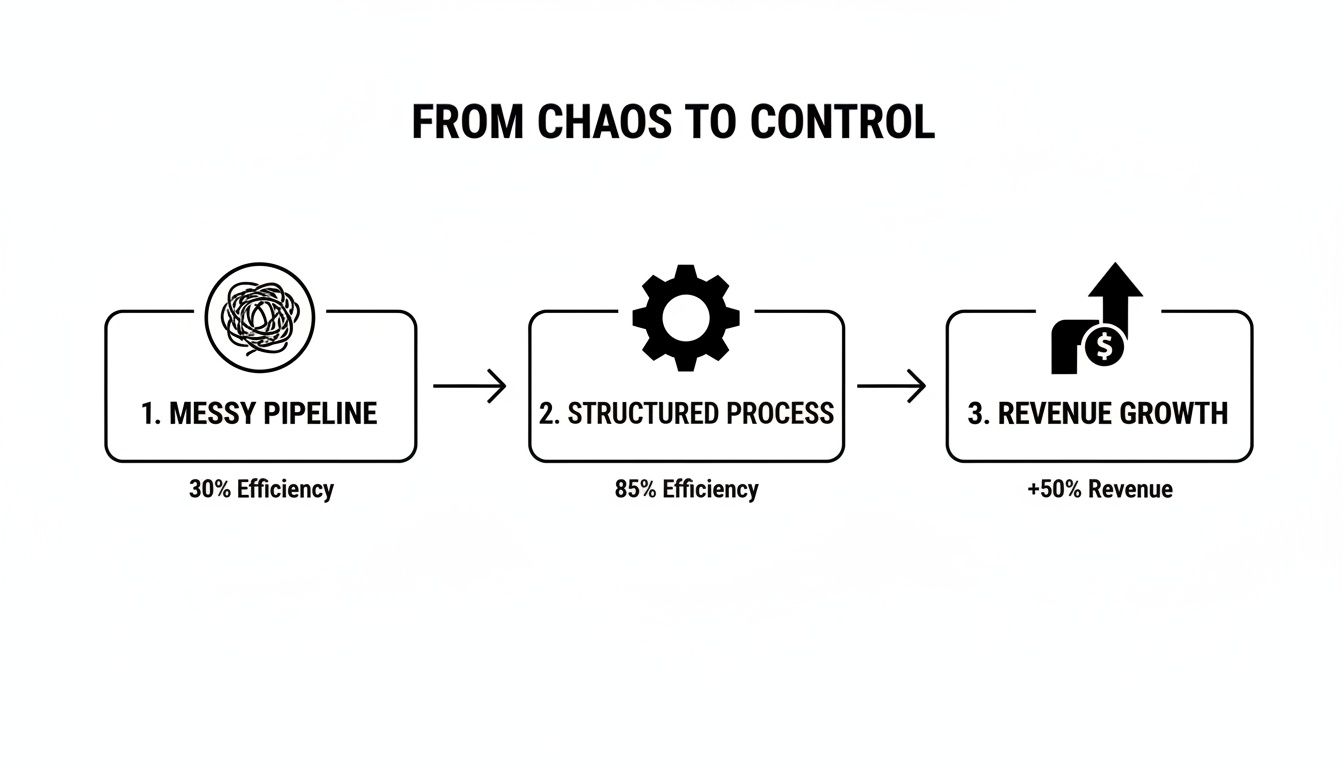
The big takeaway here is clarity. Every single stage has a distinct purpose and a measurable outcome. This isn't just for looks; it’s absolutely essential for accurate forecasting and getting your whole team on the same page.
Setting Clear Entry and Exit Criteria
Just defining the stages is only half the battle. To kill the guesswork and keep everyone consistent, every stage needs rock-solid entry and exit criteria. These are the non-negotiable rules that dictate when a deal can officially move from one stage to the next.
A deal shouldn't advance because a sales rep feels good about it. It should advance because the prospect has taken a specific, verifiable action that justifies the move.
For example, maybe a deal cannot move from "Discovery" to "Demo" until the rep has confirmed the prospect's budget and timeline and logged it in the CRM. Or perhaps a deal can’t enter "Negotiation" until the economic buyer has been identified and has joined the conversation. These rules create discipline.
This kind of structure is what transforms a chaotic, unpredictable sales effort into a streamlined process that actually drives growth.
Assigning Ownership and Accountability
Finally, every single opportunity in your pipeline must have a clear owner. This seems obvious in a small team, but as you scale, it’s frighteningly easy for leads to get lost in the shuffle between reps.
Set up your CRM to automatically assign ownership based on territory, industry, or whatever routing rules make sense for your business.
This simple act of assigning ownership ensures someone is always responsible for the next step. It also makes your pipeline review meetings a hundred times more effective. You can drill down into each rep’s portfolio and see exactly where their deals are and what they need to do to push them across the finish line.
For more inspiration on structuring your data, check out these helpful CRM database examples. Getting this foundation right makes every other part of managing your pipeline so much easier.
Keeping Your Pipeline Healthy and Moving
You’ve designed the perfect pipeline structure, which is a fantastic start. But that’s just the blueprint. A sales pipeline is a living, breathing part of your sales operation, and it needs constant attention to keep it from becoming a stagnant swamp of dead-end deals. Now we shift from architecture to execution—the real work that keeps opportunities flowing and your revenue predictable.

The single biggest threat to a healthy pipeline is neglect. Deals don't just stall on their own; they stall because of inaction. This is exactly why establishing consistent follow-up cadences is non-negotiable. It’s not about bugging prospects—it’s about maintaining momentum and actively guiding them through their buying process.
Mastering Data Hygiene and Daily Habits
Think of your CRM as a high-performance engine. It's capable of incredible things, but only if you feed it clean fuel. For sales teams, that fuel is accurate, up-to-date information. Data hygiene isn't some chore you save for the end of the quarter. It's a daily habit that separates the top performers from everyone else.
This means every single time a rep talks to a prospect, the CRM needs to be updated right away.
- Detailed Notes: What did you talk about? What new pain points came up? Who else is involved in the decision?
- A Clear Next Step: Every deal must have a future action scheduled with a due date. If there’s no "next step," the deal is already dead.
- Updated Deal Values: Did the scope change? Did they add or remove services? Keep the numbers grounded in reality.
- Accurate Close Dates: Your forecast is only as good as the dates you enter. Update them based on new information, not wishful thinking.
This isn’t about micromanaging. It's about creating a single source of truth so the entire team can make smarter decisions. For more on this, check out our guide on improving customer relationship management.
Running an Effective Weekly Pipeline Review
The weekly pipeline review is your team's most important strategic huddle. This meeting isn't for reps to just list off their deals. It should be an active, forward-looking workshop designed to solve problems, get ahead of risks, and push opportunities forward.
The goal of a pipeline review isn't to ask, "What did you do last week?" It's to ask, "What help do you need to win this week?"
To make these meetings actually count, structure them around a few critical questions that get people talking. Don't just go down a list; focus your energy where it matters most.
Key Questions for Your Weekly Review:
- What’s New? Which new, qualified opportunities entered the pipeline this week? This keeps the focus on consistent lead generation.
- What’s Stalled? Which deals haven't moved in the last 7-10 days? Let's figure out why they're stuck and make a plan to get them moving.
- What Changed? Which deals moved forward or backward? Celebrate the wins and diagnose the setbacks as a team.
- What’s at Risk? Are there any red flags, like a key stakeholder leaving or a new competitor popping up? This is where managers can jump in with coaching and resources.
- Where Are the Gaps? Looking at the whole pipeline, do we have enough coverage to hit our target? This question connects daily activity to the bigger revenue picture.
Today's B2B world demands this level of focus. Buying groups now involve up to 11 stakeholders on average, and that has stretched sales cycles by 23% since 2023. With a typical B2B win rate hovering around 21%, successful teams know they need a pipeline coverage of at least 3x their quota to navigate this complexity. You can dig into more of these pipeline generation trends on SalesIntel.io.
By building these habits—diligent data entry and structured weekly reviews—you turn your pipeline from a passive tracking tool into a dynamic, proactive system. It becomes the true command center of your sales operation, giving you the visibility and control needed to hit your goals, month after month.
Use Automation and AI to Work Smarter, Not Harder
Let's be honest, technology should make your sales process easier, not just spit out more reports to comb through. This is where automation and Artificial Intelligence (AI) really shine. They can turn pipeline management from a reactive chore into a real predictive advantage. It’s all about working smarter.

Think about it: manual data entry and repetitive follow-ups are silent killers of productivity. The whole point here is to offload these admin burdens so your team can do what they do best—build relationships and close deals.
Setting Up Smart CRM Automation
The quickest win is to set up rule-based automation right inside your CRM. Think of these as digital assistants that handle the small, routine tasks without anyone having to lift a finger. The impact is immediate, saving tons of time and making sure nothing important falls through the cracks.
Here are a few high-impact rules you can probably set up this afternoon:
- Automatic Task Creation: When a deal moves from "Discovery" to "Demo Presented," have the CRM instantly create a follow-up task for the rep, due in two days. Simple.
- Stale Deal Alerts: Set up a rule that flags any deal with no activity—no emails, no calls, no notes—for the last 14 days. This brings deals that need a nudge right to the surface.
- Smart Lead Routing: Automatically assign new inbound leads to the right rep based on territory, industry, or company size. This ensures a fast response time, which is critical.
These little automations add up quickly. They create a more disciplined sales process by enforcing good habits without you having to constantly remind everyone.
The Rise of AI in Sales
If automation handles the "what," then AI tackles the "why" and "what's next." It finds patterns in your data that even the most seasoned manager would miss, offering up insights that lead to much smarter decisions and a healthier pipeline.
AI isn't here to replace your sales reps. It's here to give them superpowers. It cuts through the noise and shows them exactly where to focus their energy for the biggest payoff.
For example, AI-powered tools can analyze all your closed-won deals to pinpoint the exact characteristics of your best customers. This insight then fuels predictive lead scoring, automatically ranking new leads based on how likely they are to convert. Instead of treating every lead the same, your team can zero in on the highest-potential prospects from day one. That's a huge efficiency gain. To really dive in, check out our complete guide on how predictive sales AI works.
From Reactive to Predictive Pipeline Management
AI also brings a new level of intelligence to analyzing deal health. It can monitor email sentiment, engagement frequency, and even the number of stakeholders involved to assign a "deal health score" to every opportunity. This takes you far beyond relying on a rep's gut feeling.
And the data backs this up. An incredible 78% of sales teams report better pipeline management after bringing in AI-driven automation. What's more, AI can boost sales efficiency by 33% and deliver 37% better lead quality. That translates directly to shorter sales cycles and more predictable revenue—the ultimate goal. You can read more about these powerful AI sales automation findings at MarketsandMarkets.
By weaving these technologies into your process, you free your team up to spend more time selling and less time on admin. You build a system that doesn't just track deals but actively helps you win them.
Tracking the Metrics That Truly Matter
You can't manage what you don't measure. It’s an old saying, but it’s the absolute truth in sales. While your CRM can spit out endless data points, getting lost in the noise is easy. The real trick is focusing on the handful of metrics that actually tell you what's going on with your revenue engine.
This isn’t about looking in the rearview mirror at last quarter's numbers. It’s about using real-time data to make smarter decisions today that will impact your results tomorrow. When you track the right things, you can spot bottlenecks before they derail your forecast and see exactly where your team is winning.
What Should You Actually Be Watching?
To get the full story, you need a balanced view of your pipeline's health. Think of it in terms of volume, speed, and efficiency. I always tell sales managers to keep a close eye on these three core metrics, as they work together to paint a clear picture.
First, you have your Average Sales Cycle Length. Simply put, how long does it take you to close a deal, from the moment it enters your pipeline to the moment it's marked "Closed-Won"? If this number starts creeping up, it’s often the first sign that something’s creating friction in your process.
Next up are your Stage Conversion Rates. This is where the magic happens. What percentage of deals are successfully moving from one stage to the next? This is your best tool for finding out exactly where deals are getting stuck. A huge drop-off between the "Demo" and "Proposal" stages tells you something specific and actionable about your process.
Finally, there’s Pipeline Velocity. This is the ultimate health score. It measures the amount of revenue flowing through your pipeline every single day. It’s a powerful indicator of your sales momentum, combining your deal count, average deal size, win rate, and sales cycle length into one potent number.
Putting the Numbers to Work
Knowing what to track is half the battle; knowing what to do with the information is the other half. Let's get practical.
Your CRM dashboard shouldn't be a vanity board. It should be an action board. Every chart and number should answer the question, "What do we need to do next?"
The best way to start is by understanding the "why" behind each number. The table below breaks down the essential KPIs, how to calculate them, and what they’re really telling you about your pipeline's performance.
Essential Sales Pipeline KPIs
| Metric | How to Calculate It | What It Indicates |
|---|---|---|
| Pipeline Velocity | (Number of Opps x Avg. Deal Value x Win Rate) / Sales Cycle Length in Days | This is the king of pipeline metrics, showing the daily value of your pipeline. A higher velocity means you're closing more revenue, faster. |
| Stage Conversion Rate | (Number of Deals in Stage Y / Number of Deals in Stage X) x 100 | Pinpoints specific weaknesses in your sales process. A low conversion rate from "Demo" to "Negotiation," for example, might mean your demos aren't hitting the mark. |
| Average Deal Size | Total Value of Won Deals / Number of Won Deals | Helps with forecasting and understanding which types of deals are most profitable. A declining average deal size might signal a need for better qualification. |
These metrics give you a framework for asking the right questions. A low win rate might not be a closing problem—it could be a qualification problem happening much earlier in the cycle. This data helps you find the root cause.
Building Your Command Center Dashboard
The good news is that your CRM should make this pretty straightforward. You don't need a dozen complicated reports to get a handle on things. A clean, well-designed dashboard can give you the insights you need at a glance.
Here’s a simple but powerful setup I recommend starting with:
- A line chart tracking Pipeline Velocity over the past 90 days.
- A funnel chart to visualize your Stage Conversion Rates.
- A big, bold number showing your current Average Sales Cycle Length.
- A simple bar chart displaying the Number of Open Opportunities by stage.
With a dashboard like this, you can check the pulse of your pipeline in under a minute. If you see velocity taking a nosedive, you can immediately drill down into your conversion rates to find the leak. This shifts your team from guessing what's wrong to knowing exactly where to focus their energy.
Answering Your Toughest Sales Pipeline Questions
Even with a perfectly designed pipeline on paper, the day-to-day reality of sales throws curveballs. This is where theory hits the road. Let's tackle some of the most common questions that come up from the sales floor and give you some straight answers to keep things moving.
Think of this as your field guide for when you get stuck. From those deals that just won't budge to figuring out the right time to cut a lead loose, these are the real-world challenges we all face.
What Do I Do With a Stalled Deal?
We’ve all been there. You have a deal that looked like a sure thing, but now it’s just sitting there, collecting dust in the same pipeline stage for weeks. It’s not just frustrating; it clogs up your pipeline and completely torpedoes your forecast.
The first move isn't to send yet another generic "just checking in" email. You have to play detective and figure out why it's stalled. Maybe your champion left the company, their budget got frozen, or a new fire drill landed on their desk. Whatever the reason, you need to find out.
Here are a few plays you can run:
- Re-engage with Value, Not a Question: Instead of asking for an update, give them something. Send over a new case study that’s relevant to their industry, share a link to an interesting article, or invite them to a webinar your company is hosting.
- Go Wide: If your main contact has gone dark, it’s time to find another way in. Fire up LinkedIn and identify other people on the buying committee. A friendly message to a potential decision-maker can often get the ball rolling again.
- Create a (Gentle) Deadline: It's perfectly fine to create a little urgency. A polite note like, "Hey, just wanted to let you know we'll need a decision by the end of the month to lock in the current pricing," can often shake a deal loose.
If you’ve tried all that and you're still getting radio silence, it’s probably time to let it go. Move the deal to "Closed-Lost" or put it in a long-term "Nurture" stage. A clean, realistic pipeline is always better than one filled with false hope.
How Many Stages Should My Pipeline Have?
This is a classic, and the honest answer is: as few as possible, but as many as necessary. Your goal here is clarity, not complexity. A pipeline with a dozen stages becomes a nightmare for reps to keep updated, which means your data will be a mess. But a pipeline with too few stages won't tell you anything about where your deals are actually getting stuck.
For most B2B sales teams, five to seven stages is the magic number. This usually covers the big milestones like Qualification, Discovery, Demo/Proposal, Negotiation, and finally, Closed-Won or Lost.
A pipeline stage should reflect a real step forward in your customer's buying journey, not just an internal task you completed. Each stage needs to represent a clear commitment or action from the prospect.
Pay attention to where deals pile up. If you notice a huge bottleneck in one stage, it’s probably too broad. For instance, if your "Proposal" stage lumps together sending the document, follow-ups, and final contract talks, you've got a problem. You’d be better off splitting that into two distinct stages—like "Proposal Sent" and "Negotiation"—to get a much clearer view of what's really happening.
When Is It Time to Disqualify a Lead?
This one feels wrong, but learning to let go is one of the most critical skills in sales. It's so tempting to hang on to every single opportunity, but chasing dead-end deals is a massive waste of time—time you could be spending on prospects who actually want to buy. Fun fact: one report showed that 44% of salespeople give up after just one follow-up. The best reps aren't just persistent; they're smart about where they spend their energy.
So, when do you pull the plug? Look for the red flags.
Common Disqualification Signals:
- They're Ghosting You: They consistently no-show for calls or ignore your emails for weeks on end.
- No Access to Power: You can't get a meeting with the person who actually holds the purse strings.
- It's a Bad Fit: As you learn more, you realize your solution isn't the right one for their problem.
- No Budget, No Timeline: They're vague about their budget or have no idea when they might make a decision.
Disqualifying a lead doesn't mean you're burning a bridge. Simply move them out of your active pipeline and into a long-term nurture sequence with your marketing team. That way, your brand stays on their radar, and if things change down the road, they’ll know who to call. This discipline keeps your pipeline clean, your forecast accurate, and your team focused on winning.